Protein Bar Manufacturing: How to Develop a High-Protein Bar with the Right Texture and Shelf Life (2026)
By Arjun N|November 5, 2026|9 min read
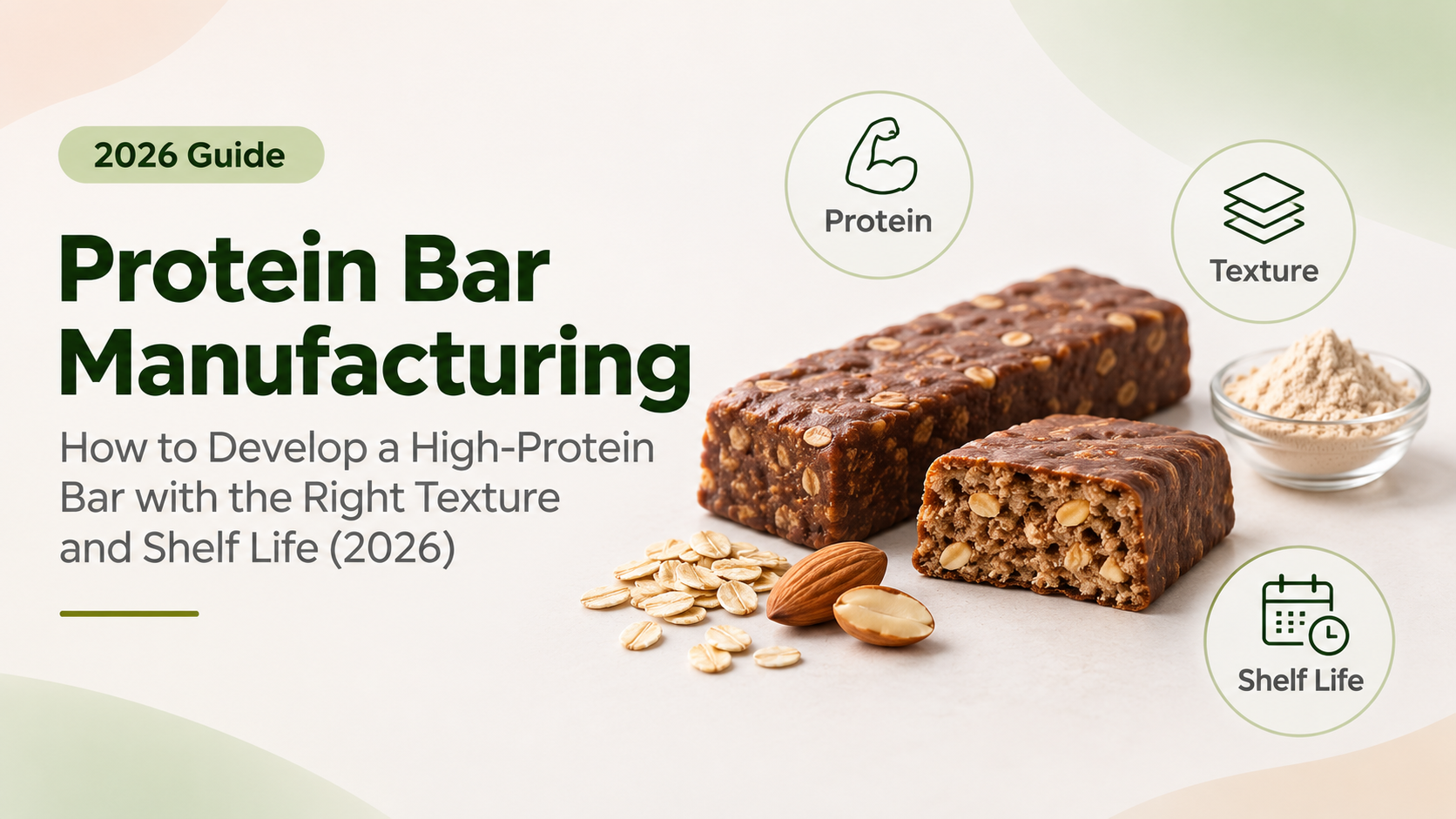
Protein Bar Manufacturing: How to Develop a High-Protein Bar with the Right Texture and Shelf Life (2026)
Key Takeaways
- Hardening is the number one failure. Bars started at about 3.4 N hardness and hardened in storage; intact whey bars ended near 100 N, about ten times harder than hydrolysed whey bars (Journal of Food Science, 2009).
- Protein choice matters more than sugar choice. Replacing intact whey protein isolate with partly hydrolysed whey cut hardness by 55%; switching to sorbitol syrup cut it by 25% (Utah State University thesis, 2008).
- Hardening starts within a day. Water moved away from the protein towards glucose and glycerol 10 to 18 hours after the bars were made (Food Research International, 2010).
- Protein bars are intermediate-moisture foods. Their water activity sits around 0.6 to 0.9, where browning reactions often limit shelf life (Massey University author version).
- A "high protein" label has a fixed bar. Under FSSAI rules, a solid food needs at least 20% of the RDA for protein per 100 g to claim "high protein", and 10% to claim "source of protein" (FSSAI direction, 2019).

Founder & CEO, SolutionBuggy
Arjun N spent a decade in manufacturing and industrial engineering before founding SolutionBuggy in 2016. Today, SolutionBuggy connects 60,000+ registered MSMEs with 12,000+ verified manufacturing consultants across India, with 3,500+ completed projects and a 4.5 client satisfaction rating.
FOUNDER & CEO
Solutions For
Reach Us
Bangalore (Head Office)
#249, 2nd floor, 14th Main Rd, Sector 7, H.S.R Layout, Bangalore - 560102.
Across India : Delhi | Pune | Mumbai | Chennai | Ahmedabad | Hyderabad | Kolkata, and 30+ major cities across India
Copyright © 2026 SolBuggy. All Rights Reserved