Vacuum Fried Chips and Snack Development: Processing Technology, Texture and Shelf-Life Challenges (2026)
By Arjun N|November 5, 2026|8 min read
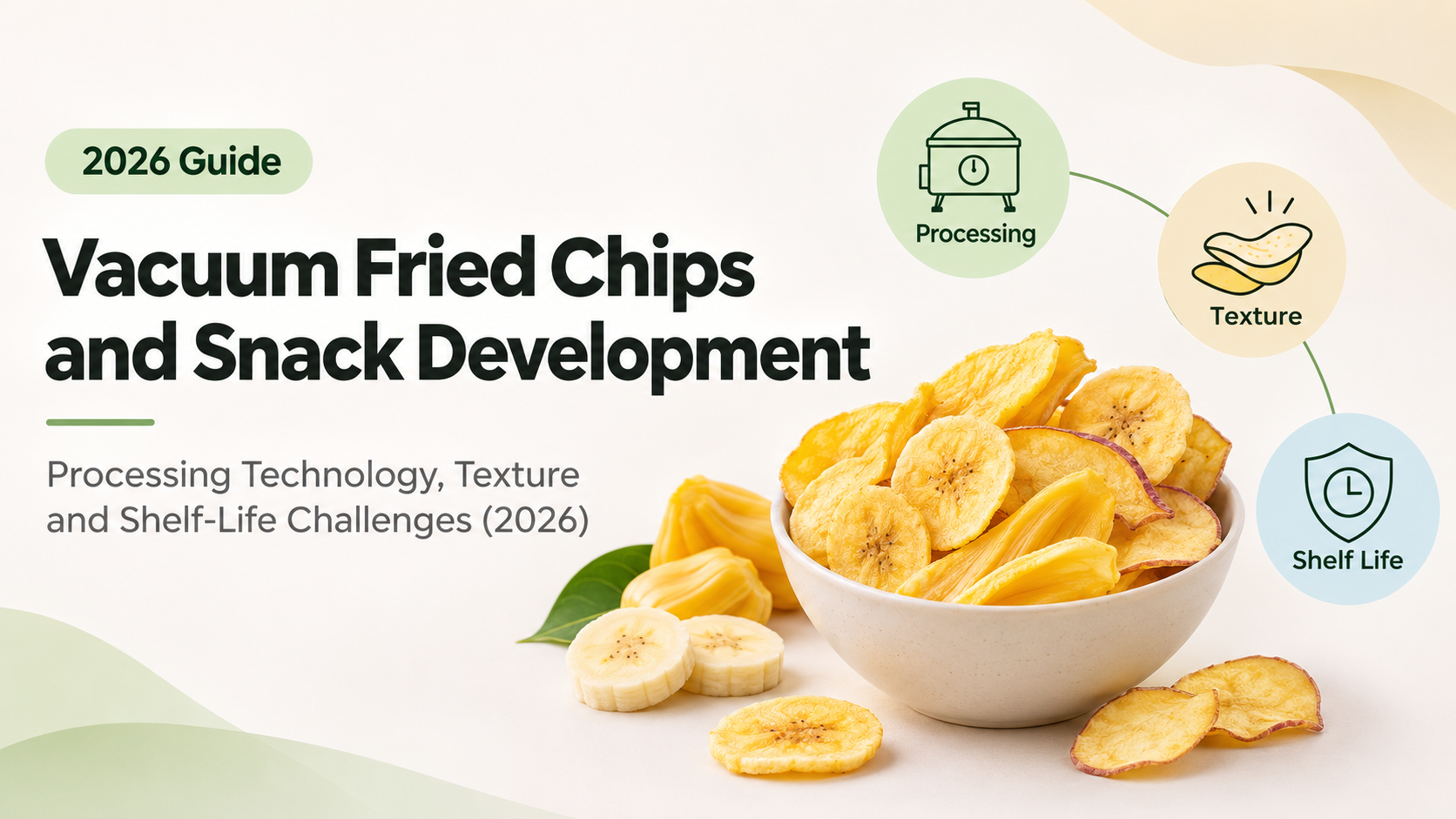
Vacuum Fried Chips and Snack Development: Processing Technology, Texture and Shelf-Life Challenges (2026)
Key Takeaways
- Lower temperature means far less acrylamide. Vacuum frying potato slices at 118°C cut acrylamide by about 94% compared with traditional frying (Granda et al., 2004, cited in dairyknowledge.in chapter).
- Vacuum fried slices absorb less oil. In one study, vacuum fried slices absorbed 47 to 50.5% less oil than atmospheric fried ones (Dueik et al., 2010, same source).
- De-oiling is not optional. Potato chips vacuum fried at 120°C held 0.43 g of oil per gram without centrifuging, against 0.097 g with a centrifuge step (Moreira et al., 2009, same source).
- Speed after frying matters. Plantain chips took up 7.7% more oil during 9 minutes of cooling after frying (IITA, 2021), so de-oil before the vacuum is released.
- Shelf life is a packaging problem. In an Indian study of vacuum fried jackfruit chips, rancidity markers rose fast after 15 days, and metallised multilayer packs with nitrogen flushing kept them best (Krishikosh thesis).

Founder & CEO, SolutionBuggy
Arjun N spent a decade in manufacturing and industrial engineering before founding SolutionBuggy in 2016. Today, SolutionBuggy connects 60,000+ registered MSMEs with 12,000+ verified manufacturing consultants across India, with 3,500+ completed projects and a 4.5 client satisfaction rating.
FOUNDER & CEO
Solutions For
Reach Us
Bangalore (Head Office)
#249, 2nd floor, 14th Main Rd, Sector 7, H.S.R Layout, Bangalore - 560102.
Across India : Delhi | Pune | Mumbai | Chennai | Ahmedabad | Hyderabad | Kolkata, and 30+ major cities across India
Copyright © 2026 SolBuggy. All Rights Reserved